


Medical Coding QA (Quality Analyst): Roles, Skills and Career Opportunities
What Is Medical Coding QA?
Medical Coding Quality Assurance (QA) is an important function in the healthcare revenue cycle. A Medical Coding Quality Analyst reviews coded medical records to evaluate whether the assigned codes are accurate, complete, compliant, and supported by the documentation.
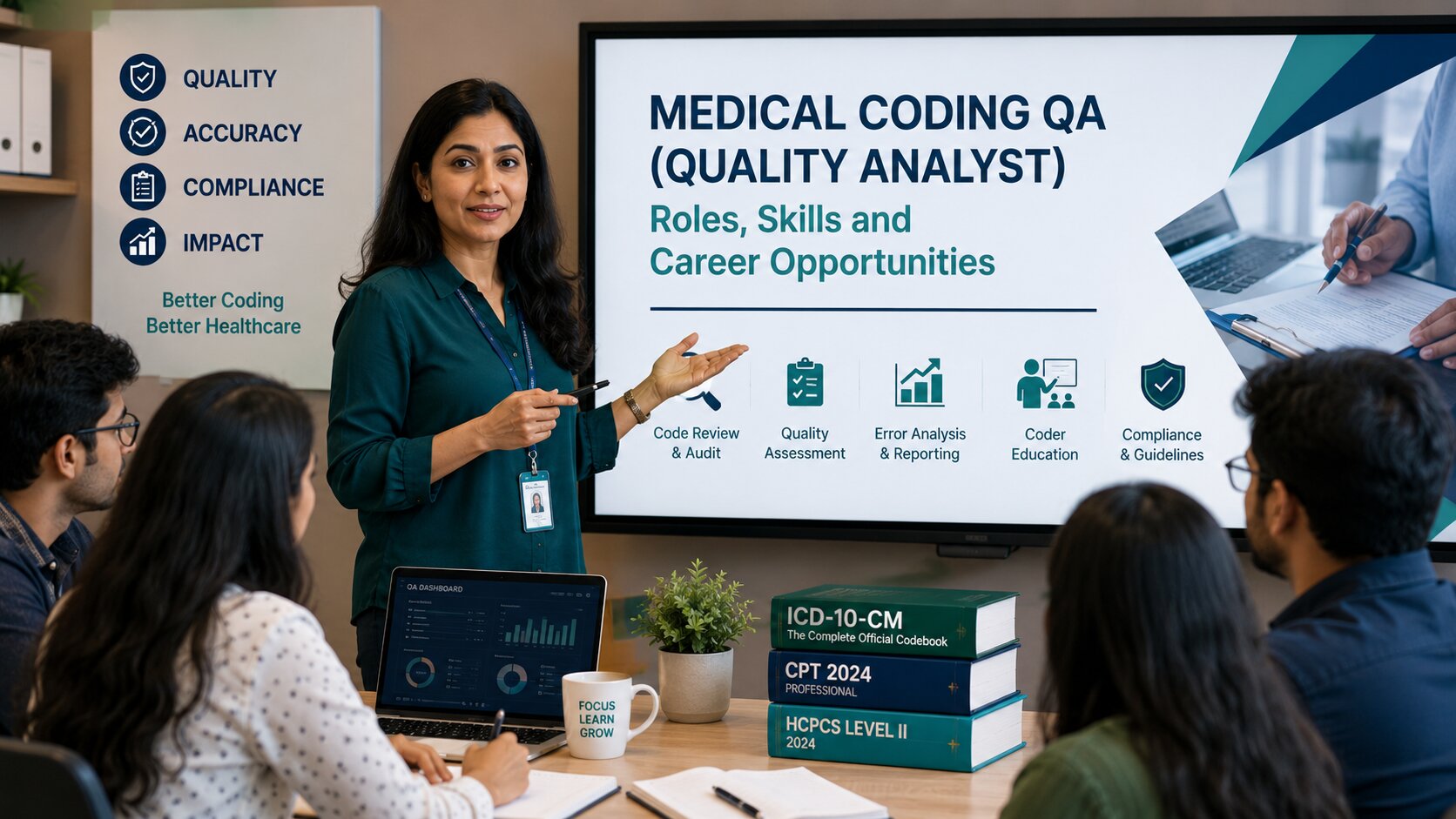
QA professionals play an important role in maintaining coding accuracy and identifying opportunities for improvement. They help organizations detect coding errors, understand recurring problems, support compliance, and improve the overall quality of medical coding.
What Does a Medical Coding Quality Analyst Do?
A Medical Coding Quality Analyst examines medical records and the codes assigned to those records. The analyst compares the documentation with the reported diagnosis and procedure codes and determines whether the coding is supported.
Depending on the organization and specialty, a QA professional may review inpatient, outpatient, physician, emergency department, facility, or other types of medical coding.
The role is not simply about finding mistakes. A strong QA process also helps identify why errors occur and provides useful feedback that can improve coder performance.
Key Responsibilities of a Medical Coding QA
The exact responsibilities may vary between organizations, but a Medical Coding Quality Analyst commonly performs activities such as:
- Reviewing medical records for coding accuracy.
- Validating diagnosis and procedure code assignments.
- Identifying coding errors and documentation-related issues.
- Reviewing claims or coded records based on organizational quality standards.
- Maintaining quality scores and audit results.
- Providing feedback to medical coders.
- Identifying recurring coding errors and trends.
- Supporting coder education and quality improvement.
- Following current coding guidelines and organizational policies.
Medical Coding QA vs Medical Coder
Medical coders and coding QA professionals work closely together, but their responsibilities are different.
A medical coder reviews the medical documentation and assigns the appropriate diagnosis, procedure, and other applicable codes.
A Quality Analyst reviews coded records to determine whether the coding is accurate and supported by the documentation and applicable coding guidelines.
In simple terms, the coder focuses on producing accurate coding, while the QA professional focuses on reviewing and measuring coding quality.
Important Skills for a Medical Coding QA
A successful coding QA professional needs a combination of coding knowledge, analytical ability, communication skills, and attention to detail.
1. Strong Medical Coding Knowledge
A QA professional should have a strong understanding of medical terminology, anatomy and physiology, ICD coding, CPT coding, HCPCS coding, and applicable coding guidelines.
2. Attention to Detail
QA work requires careful review of medical records. Small differences in documentation can affect code selection, sequencing, modifiers, or other coding decisions.
3. Analytical Skills
Quality Analysts need to identify patterns and understand why errors are occurring. Analytical skills are particularly useful when reviewing quality reports and identifying recurring issues.
4. Knowledge of Coding Guidelines
Coding QA professionals must stay familiar with current coding guidelines and updates relevant to the services and specialties they review.
5. Communication Skills
QA professionals often provide feedback to coders. They need to explain errors clearly and professionally so that coders understand the reason for the correction.
6. Computer and Data Skills
Modern QA teams may use coding platforms, electronic health record systems, spreadsheets, audit tools, dashboards, and other software. Basic data analysis skills can therefore be valuable.
How Does a Coding QA Audit Work?
A typical QA review begins with selecting a sample of coded records according to the organization's quality process.
The Quality Analyst then reviews the medical record, compares the documentation with the assigned codes, checks sequencing and other applicable coding rules, and records any identified errors.
The results may then be summarized into a quality score or audit report. Feedback can be provided to the coder, team leader, or manager depending on the organization's process.
Common Areas Reviewed During QA
Depending on the type of coding being audited, a QA professional may review areas such as:
- Diagnosis code accuracy.
- Procedure and service code accuracy.
- Code sequencing.
- Modifier usage.
- Documentation support.
- Medical necessity requirements where applicable.
- Compliance with coding guidelines.
- Missing or unsupported codes.
- Duplicate or incorrect code reporting.
Why Is Coding QA Important?
Coding quality directly affects several areas of healthcare operations. Accurate coding supports appropriate claims processing, reporting, compliance, reimbursement, and data quality.
A structured QA program can help organizations identify training needs and reduce repeated coding errors.
QA also creates a feedback loop between coding, training, and management teams. This can help organizations continuously improve their coding processes.
Career Opportunities in Medical Coding QA
Medical Coding QA can be an attractive career progression for experienced medical coders who want to move into quality, auditing, training, or supervisory roles.
Depending on experience and specialization, professionals may explore roles such as:
- Medical Coding Quality Analyst.
- Coding Auditor.
- Senior Medical Coder.
- Coding Quality Specialist.
- Coding Trainer.
- Coding Team Leader.
- Coding Supervisor.
- Quality and Compliance Specialist.
How Can a Medical Coder Move Into QA?
A strong coding foundation is the best starting point for someone interested in a QA career. Professionals can gradually develop their QA capabilities through experience and additional training.
- Build strong coding fundamentals: Develop a solid understanding of medical terminology, anatomy, ICD, CPT, HCPCS, and coding guidelines.
- Gain coding experience: Practical coding experience helps professionals understand common errors and real-world challenges.
- Develop auditing skills: Learn how to review records systematically and document audit findings.
- Improve communication: Learn how to provide constructive and professional feedback.
- Learn quality metrics: Understand concepts such as accuracy rates, error trends, audit samples, and quality scores.
- Stay updated: Continue learning about coding updates and changes to applicable guidelines.
Certifications and Professional Development
Professional certifications can help demonstrate knowledge and commitment to the medical coding field. Depending on an individual's career goals, relevant coding or auditing credentials may be considered.
However, certification alone is not a substitute for practical coding knowledge. Employers may also value real-world coding experience, audit experience, communication skills, and knowledge of quality processes.
Skills That Can Help You Stand Out in QA
Medical coding professionals who want to move toward QA can focus on developing the following skills:
- Strong knowledge of medical coding.
- Excellent attention to detail.
- Critical thinking.
- Analytical and problem-solving skills.
- Professional written and verbal communication.
- Knowledge of quality assurance processes.
- Ability to work with spreadsheets and reports.
- Ability to identify trends and recurring errors.
- Commitment to continuous learning.
Final Takeaway
Medical Coding QA is an important career path for professionals who enjoy reviewing medical records, identifying coding errors, analyzing quality trends, and helping others improve their coding accuracy.
The role requires more than simply knowing medical codes. A successful Quality Analyst needs strong coding knowledge, attention to detail, analytical thinking, communication skills, and an understanding of quality processes.
For medical coders looking to grow their careers, QA can provide a pathway toward specialized quality, auditing, training, leadership, and supervisory opportunities in the healthcare industry.
